


Kinesitherapy
& Kinesiotaping
Build your world free of pain and limitations at In Locco Fizio Center!
Kinesitherapy
Exercises
As one of the most common methods of physical therapy, Kinesiotherapy offers a range of benefits and positive effects. This type of therapy involves performing exercises aimed at improving the overall condition of the patient’s problem. Our expert team conducts a series of specialized exercises with the patient that help activate muscles and speed up the healing process.
This therapy is primarily indicated for patients with chronic pain, tense muscles, persistent swelling, as well as for those with recent injuries.
Kinesiotherapy works deeply by strengthening muscles, increasing mobility, and improving the body’s functionality. Our specialists use kinesiotherapy to help you manage pain, rehabilitate after injuries, and improve your physical health.
Through controlled movements and exercises tailored to your needs, kinesiotherapy adapts to you and your body. You will feel your strength and vitality returning, while pain gradually diminishes. Kinesiotherapy is the key to longevity and body health, and we are here to guide you on the path.
Which health problems does kinesiotherapy treat?
Kinesiotherapy is used for a wide range of problems, both for acute injuries and chronic conditions. Some of the issues that kinesiotherapy effectively treats include:
Muscle and joint injuries
Kinesiotherapy is effective in rehabilitating muscle and joint injuries such as strains, sprains, fractures, or inflammations. The therapist will design a specific exercise program to restore strength and mobility to the affected body parts.
Back and neck pain
Kinesiotherapy is very successful in reducing back and neck pain, especially in chronic conditions like herniated discs, sciatica, or pain caused by poor posture or strain.
Postoperative rehabilitation
After surgeries, kinesiotherapy plays a key role in restoring mobility, reducing pain, and rebuilding strength and function during the postoperative period.
Sports injuries
Athletes often use kinesiotherapy to recover from injuries such as strains, sprains, ligament and tendon injuries, as well as to improve flexibility and strength, which is important for preventing future injuries.
Rehabilitation after stroke
Kinesiotherapy is crucial for restoring function after a stroke. Exercises improve mobility, balance, coordination, and strengthen weakened muscles, helping patients regain as much functionality as possible.
Balance and coordination problems
Kinesiotherapy is effective in restoring balance and coordination, which is especially important for older adults or patients with neurological disorders.
Improvement of general physical fitness
Kinesiotherapy is not only for injury treatment; it is also used to improve overall physical fitness, strength, flexibility, and endurance, as well as to prevent injuries.
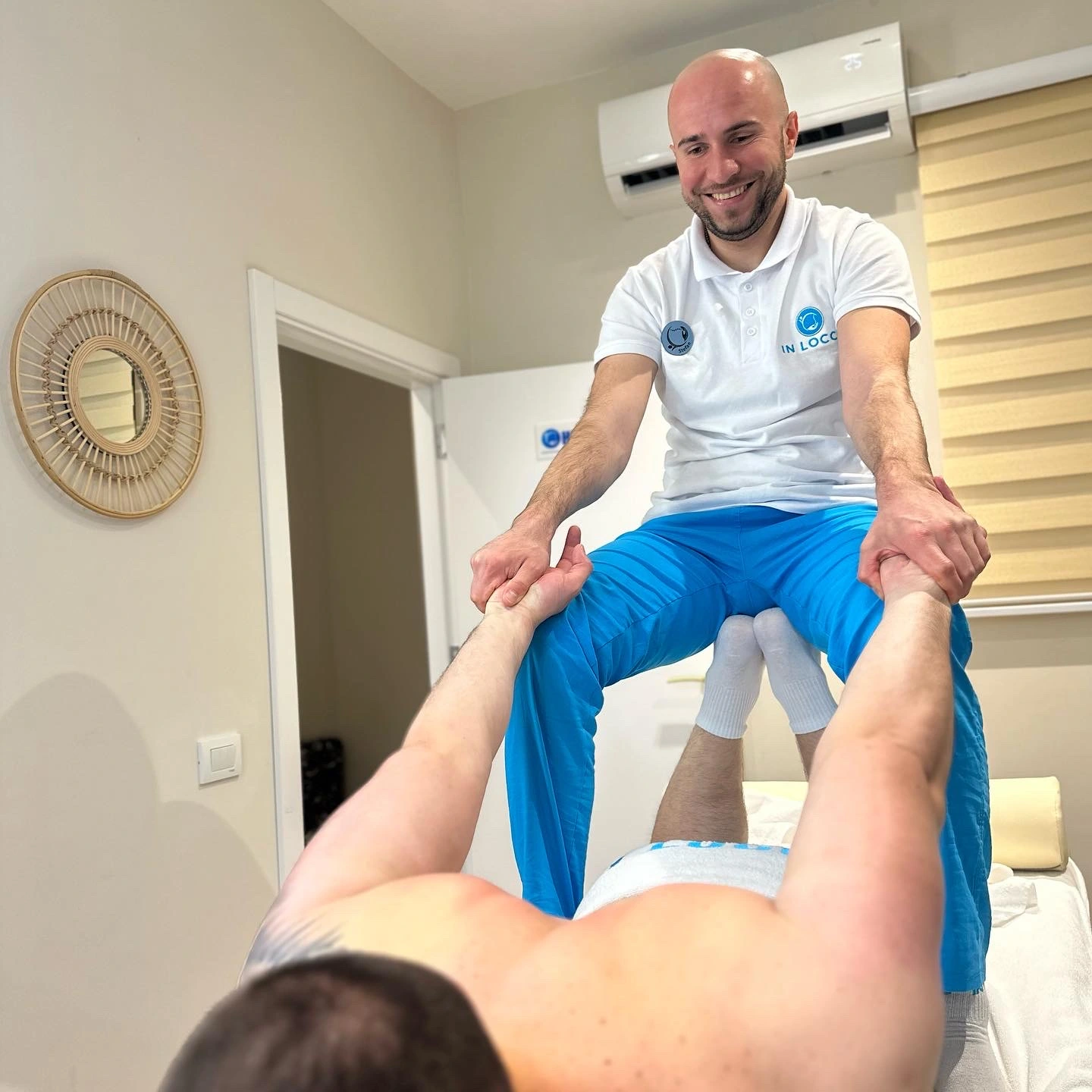
The process of kinesitherapy includes:
Evaluation and assessment
The first and most important step in the kinesitherapy process is a thorough assessment of the patient's physical condition. In this initial phase, the kinesitherapist will analyze your current mobility, strength, flexibility, balance, and the presence of any pain or injuries. Through a detailed conversation with the patient, the therapist will identify all relevant symptoms and injuries, as well as the root cause of the problem. This process may also include joint mobility testing, muscle strength evaluation, and examination of muscle coordination. Based on this analysis, the therapist gains insight into what is needed to ensure recovery and achieve the desired therapy goals.
Goal setting
After completing the initial assessment, the therapist and patient jointly set the therapy goals. These goals can vary depending on the patient's specific needs and may include pain reduction, improved mobility, muscle strengthening, or even enhanced athletic performance. The goals are always set to be realistic and achievable, taking into account the patient’s current physical abilities. The therapist may establish short-term goals to be achieved during the first weeks of therapy, as well as long-term goals aimed at attaining optimal health and functionality.
Program design
Based on the established goals, the therapist creates a personalized program of exercises and movements. The program may include various types of exercises tailored to the specific needs of the patient. These can be stretching exercises to improve flexibility, muscle strengthening exercises, as well as exercises that help enhance balance and coordination. The kinesiotherapist will use different techniques to ensure maximum effectiveness, including both static and dynamic exercises, as well as the use of specialized equipment when necessary. The program is designed to address the specific problem, whether it is an injury, chronic pain, or recovery after surgery.
Supervised exercises
One of the key factors for the success of kinesiotherapy is the proper technique of performing exercises. During each session, the kinesiotherapist is present and guides the patient through the exercises, ensuring that all movements are performed correctly and safely. Proper technique is essential because incorrect execution of exercises can lead to new injuries or reduce the effectiveness of the therapy. The therapist provides corrections and advice regarding exercise execution, taking into account the patient’s physical abilities. Since the therapy is tailored to individual needs, the patient learns how to gradually improve their technique and increase the intensity of the exercises.
Gradual progression
As the patient progresses, the therapy program is gradually adjusted. The therapist regularly monitors progress and makes necessary modifications to the exercises to ensure the patient moves toward the set goals. Gradual progression is important because it prevents overloading the body and allows continuous improvement without strain. Additionally, as strength and flexibility improve, the therapy is adapted to greater challenges, including increased resistance, more complex movements, and longer exercise duration.
When is Kinesiotherapy the Right Option for You?
Kinesiotherapy is an excellent choice in various situations and is especially recommended:
If you have muscle, joint, or back pain, kinesiotherapy can significantly reduce pain and improve functionality.
If you have suffered an injury — whether from work, sports, or daily activities, kinesiotherapy will assist in your recovery.
After surgeries — kinesiotherapy is crucial for postoperative recovery, helping to restore strength and mobility.
If you want to improve your physical fitness and prevent injuries, kinesiotherapy can help maintain health and prevent future problems.
Kinesiotaping
More about the treatment
Kinesiotaping is a specific technique that falls under mechanotherapy and uses elastic strips to provide a therapeutic effect on painful or injured areas of the body. This method is popular among athletes, as well as patients dealing with chronic pain, injuries, or problems with muscles and joints. The strips are applied directly to the skin, where they stimulate the healing process and reduce discomfort. Due to its non-invasive nature, kinesiotaping represents a safe and effective treatment method without the need for medication or surgery.
The strips used for kinesiotaping are elastic, waterproof, and made of cotton material, allowing the skin to breathe and preventing irritation. Additionally, the strips contain an adhesive substance that enables them to stick firmly to the skin but can be easily removed without damage. This material adapts to different body shapes and can be used on various parts of the body, including joints, muscles, ligaments, and tendons.
Kinesiotaping can be very effective in treating various conditions, such as sports injuries, back pain, knee problems, shoulder joints, elbows, and many other issues. The therapy works by helping reduce pain, alleviating inflammation, improving circulation, and speeding up tissue healing. The strips also help stabilize joints and muscles while allowing freedom of movement, making them suitable for everyday use.
Preparation for Kinesiotaping and Recovery
One of the main advantages of kinesiotaping treatment is that it requires no special preparation. First, the skin on the area where the tape will be applied must be clean and dry to ensure good adhesion. It is also recommended that the skin be shaved before applying the tape, as this helps maintain the tape in place and prevents discomfort when removing it. Since kinesio tapes do not contain any pharmacological substances, there is no need for additional medications or products before or after the treatment.
Once the tape is applied, the patient can return to their usual activities. The tapes are waterproof, so the patient can engage in physical activities, including sports, or take showers during the treatment without fear of damaging the tape. The effect of the tape usually lasts between 3 and 5 days, after which the supportive effect gradually diminishes. The kinesiotherapist will assess when it is time to remove the tape, which is usually done carefully to avoid skin irritation.
After the tape is removed, the skin should be free from any irritation, as the recovery process continues without the need for additional treatments.
Why choose Fizio and Estetik Center In Locco for kinesitherapy?
For more information or to schedule an appointment, call us at 060 6060 308.